
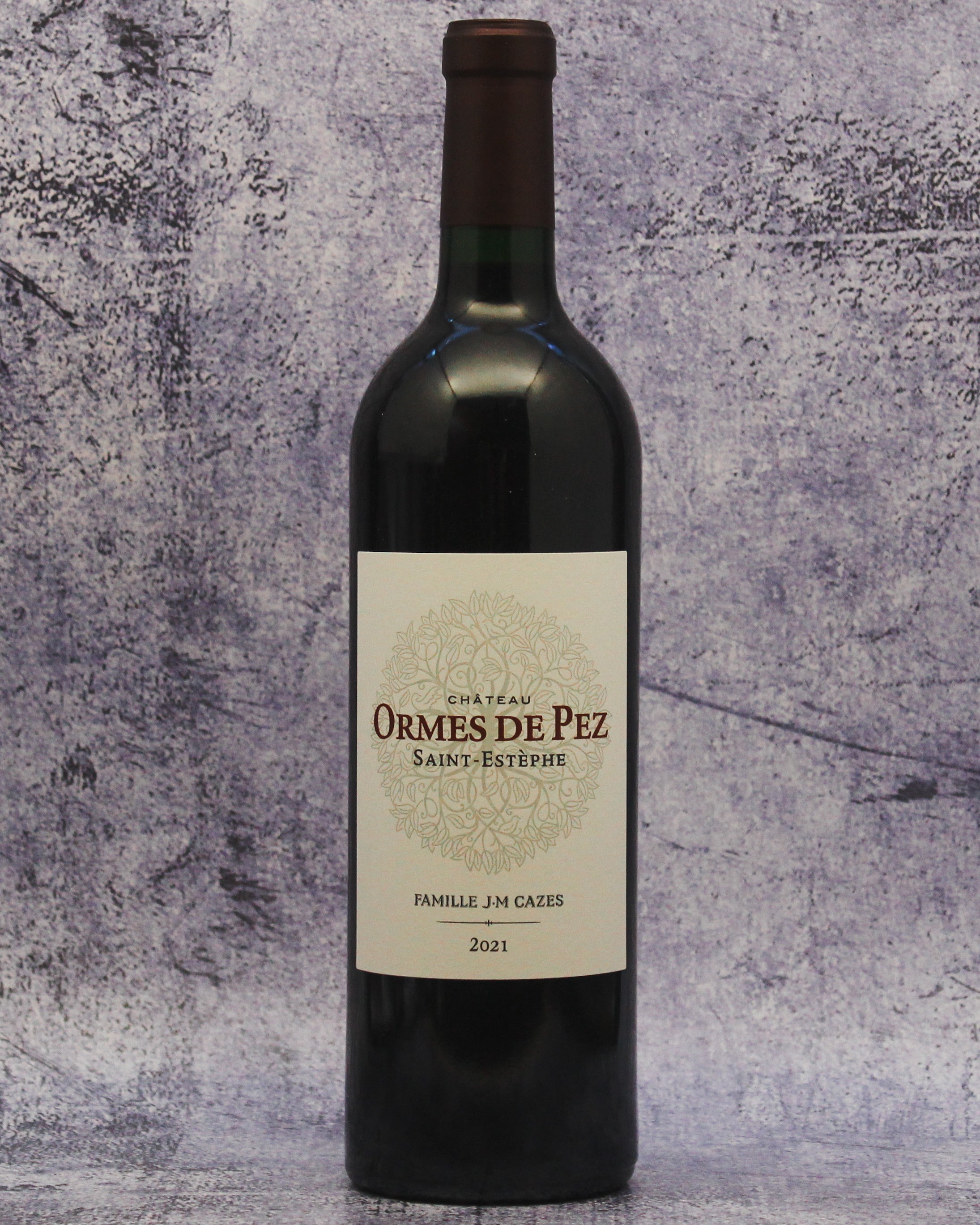

Details:
Product Details
| Country: | France |
|---|---|
| Region: | Bordeaux |
| Sub-Region: | Left Bank |
| Appellation: | Saint-Estèphe AOC |
| Grape(s): | Cabernet Sauvignon, Merlot, Cabernet Franc, Petit Verdot |
| Wine Style: | Red |
| Composition: | Blend |
| Practices: | Sustainable Viticulture |
Taste: In the glass, this shows a deep garnet hue with ruby reflections. The nose opens with lifted aromas of black cherry, cassis, and ripe plum, layered with notes of cedar, graphite, violet, and freshly turned earth. On the palate, it is medium-bodied yet concentrated, with vibrant acidity that keeps the dark fruit core lively and precise. This has a plush texture and roundness through the mid-palate, with fine-grained tannins, depth, and a faintly savory edge. Hints of tobacco leaf, clove, and crushed stone emerge with air. The finish is long, fresh, and finely mineral.
Critical Acclaim: “Ripe black-currant aromas and a smoky edge from tannins are lifted onto the wine's nutmeg spice and toast. They go along with the dense black fruits that are powerful and structured. Drink from 2027.” 93 Points, Roger Voss, Wine Enthusiast
“Medium-bodied with a firm tannin frame and pretty notes of pencil lead, blackberries and some walnuts. Hints of chocolate orange, too. Structured and a little chewy, with perfumed character. Juicy. 49% merlot, 40% cabernet sauvignon, 6% cabernet franc and 5% petit verdot.” 93 Points, James Suckling
Pairing: This vintage’s balance of freshness and structure makes it versatile in pairing. When pairing, think in terms of texture and savory depth—the wine’s firm yet polished tannins pair beautifully with roasted or braised meats, while its brightness refreshes dishes with herbal or earthy components.
About: Famille JM Cazes, based in the town of Pauillac, stands as one of the most storied families in the Médoc—its history an enduring blend of migration, viticulture, and hospitality. Owners of Château Lynch-Bages since 1939, the Cazes family has expanded from the rolling mountains of the Ariège to the gravelly vineyards of the Left Bank and beyond, shaping a legacy defined as much by journey as by place. Across generations, they’ve built not just an estate, but a lasting name that links the story of Bordeaux’s growth.


