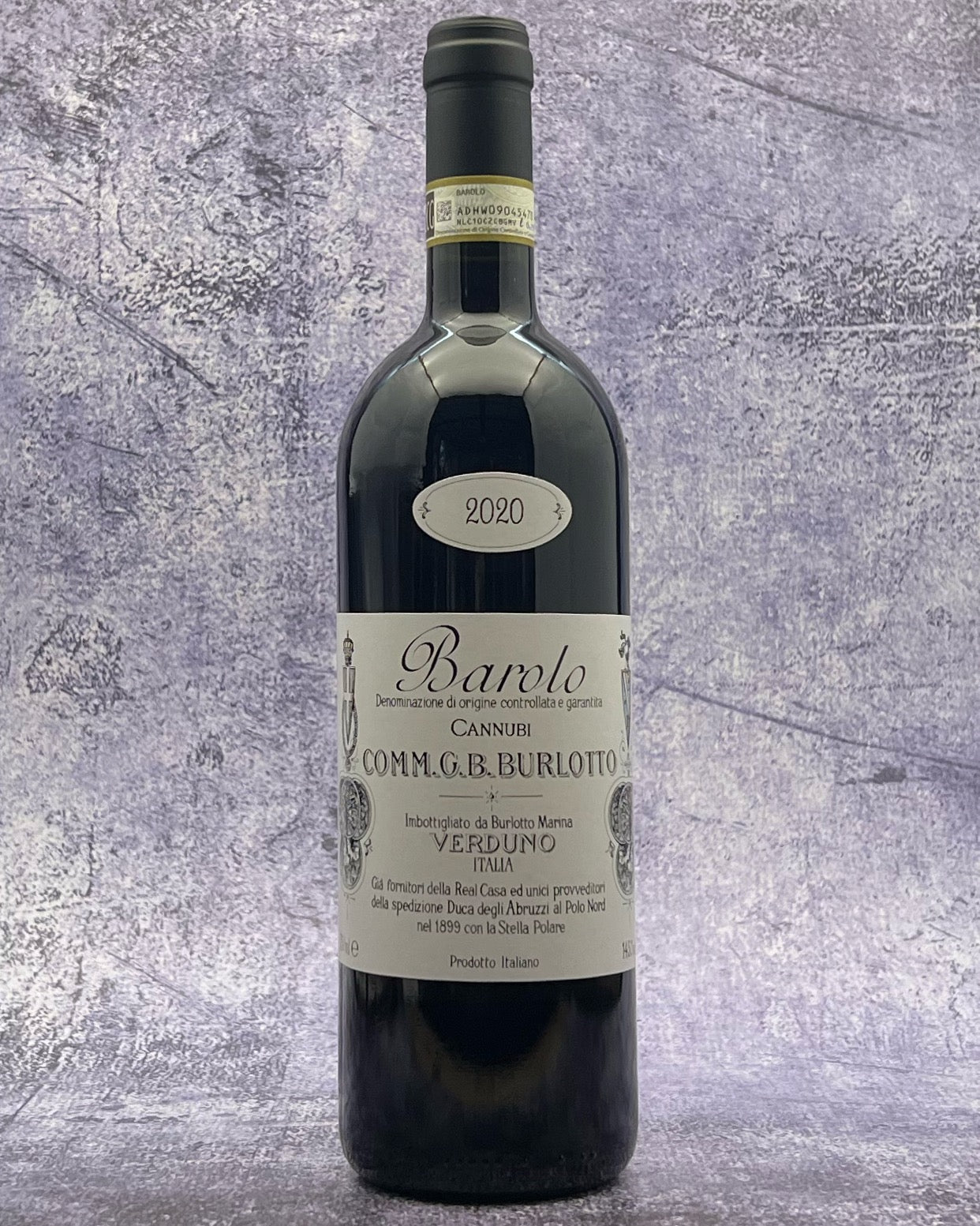
"The 2020 Barolo Cannubi is very fine and delicate with light rose, peony and floral aromas that dovetail into tart fruit, small currants and underripe cherry. This lean-bodied Barolo is all about grace, detail and pinpoint aromas that cede to smooth ripeness and fine texture. The Cannubi offers an almost weightless style with integrated oak, cedar, camphor ash and crushed stone. Some 4,000 bottles of this quintessentially pretty wine were made. Drink 2026-2050 (Apr 2024)" 97 points Monica Larner Wine Advocate
"Jeweled ruby in color, the 2020 Barolo Cannubi is very attractive on the nose, revealing aromas of raspberry liqueur, pink peppercorn, fresh roses, and toasted anise. Medium-bodied, it’s approachable and fresh, with a rounded midpalate and a weightless feel while having good concentration. Plush tannins float through the finish, as does its long-lasting fruit perfume. This is one of my favorite wines from Cannubi in this vintage and tasted over several days it continued to over-deliver. Drink 2024-2040. (May 2024)" 97 points Audrey Frick JebDunnuck.com
"The 2020 Barolo Cannubi is the most expressive of the Burlotto Barolos today. Relative to the Monvigliero especially, it benefits from having spent ten more months in bottle. The 2020 shows the lighter style of the year, but has gorgeous textural depth to fill out its layers. Plush tannins wrap around a core of black cherry, plum, cloves, new leather and licorice. The Cannubi is a standout. Drink 2028-2045 (Jan 2024)" 96 points Antonio Galloni Vinous
More About The Wine: Cannubi Vineyard
In the commune of Barolo we own a parcel in the cru with the longest history in all of Italy: Cannubi.
This mythical vineyard, already known as a potential cru of Barolo in the eighteenth century, is located in the center of the Barolo production area. Like those of Monvigliero, these clay-limestone marls are part of the geological group called “di Sant’Agata Fossili”, but in a different, extremely sandy form. Our family’s parcel, in the area called “Cannubi Valletta”, covers an area of 0.7 hectares, with a maximum altitude of 280 meters above sea level. It was replanted in 1988 on the Kober 5BB rootstock, which, with its vigor, works well in these extremely poor subsoils.