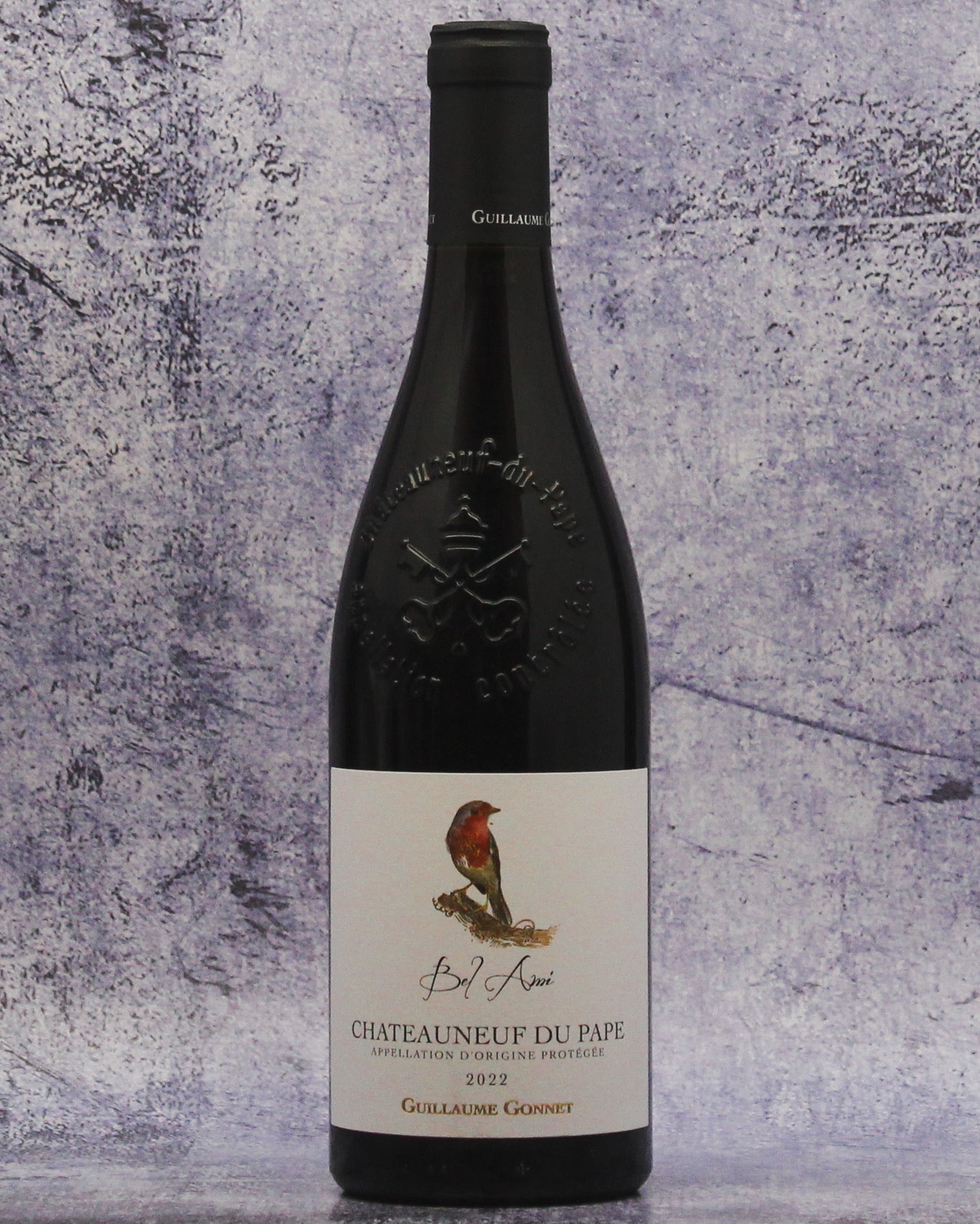
2022 Guillaume Gonnet Châteauneuf-du-Pape Rouge "Bel Ami"


Price:
Sale price$47.00
Stock:
Only 24 units left

Details:

Country: France
Region: Rhône Valley
Sub-Region: Southern Rhône
Appellation: Châteauneuf-du-Pape AOC
Grape(s): Garnacha / Grenache, Syrah / Shiraz, Mourvèdre / Monastrell, Cinsault
Wine Style: Red
Composition: Blend
Practices: Practicing Biodynamic

Taste Block

Tasting Notes

70% Grenache Noir, 10% Syrah, 10% Mourvèdre, 10% Cinsault

Critical Acclaim:

91 Robert Parker's Wine Advocate. A blend of 70% Grenache Noir, 10% Syrah, 10% Mourvèdre and 10% Cinsault, the 2022 Chateauneuf du Pape Bel Ami from Guillaume Gonnet reveals a spicy bouquet of fresh thyme, licorice and dark wild berries. Medium to full-bodied, round and enrobing, it's dense with a fleshy core of fruit, velvety tannins and a long, structured, elegant finish. Partly destemmed and matured for 12 months in a combination of foudres, large barrels, stainless steel and concrete tanks, it could improve in the cellar.

Pairing Block

Food Pairing

The wine’s ripe fruit, savory undertones, and moderate structure make it well suited to hearty but not overly heavy dishes. It pairs naturally with grilled sausages, roasted lamb, and pork dishes seasoned with herbs, where the wine’s acidity and spice complement savory flavors. Tomato-based stews, ratatouille, and mushroom dishes are also strong matches. Avoid very spicy or heavily charred foods, which can dominate the wine’s balanced profile.

Producer Block

About the Producer

Guillaume Gonnet is a Châteauneuf-du-Pape vigneron based in Courthézon who combines three generations of family tradition with a distinctly global perspective shaped by more than a decade of experience in Bordeaux, Burgundy, Napa Valley, New Zealand, and Australia. Since taking over the family estate in 2006, and together with his wife Kelly McAuliffe Gonnet, a trained sommelier, he has built a domaine focused on expressing terroir over technique through minimal intervention, biodynamically minded farming, and restrained winemaking. Their vineyards, purchased in 2015 and supplemented by trusted growers across the Southern Rhône, are planted mainly to Grenache, Syrah, and Mourvèdre on diverse soils including galets roulés, sand, and limestone, with all fruit hand-harvested. Fermentations use native yeasts, often with whole clusters, and élevage favors concrete, neutral foudres, and old barrels to preserve freshness and transparency. While rooted in Châteauneuf-du-Pape, the range spans leading Rhône appellations such as Gigondas, Lirac, and Vacqueyras, all sharing a signature of elegance, balance, and typicity, and is now extending thoughtfully to old-vine sites in Spain and Australia.

You may also like

Recently viewed